
Express delivery available in 5 days.
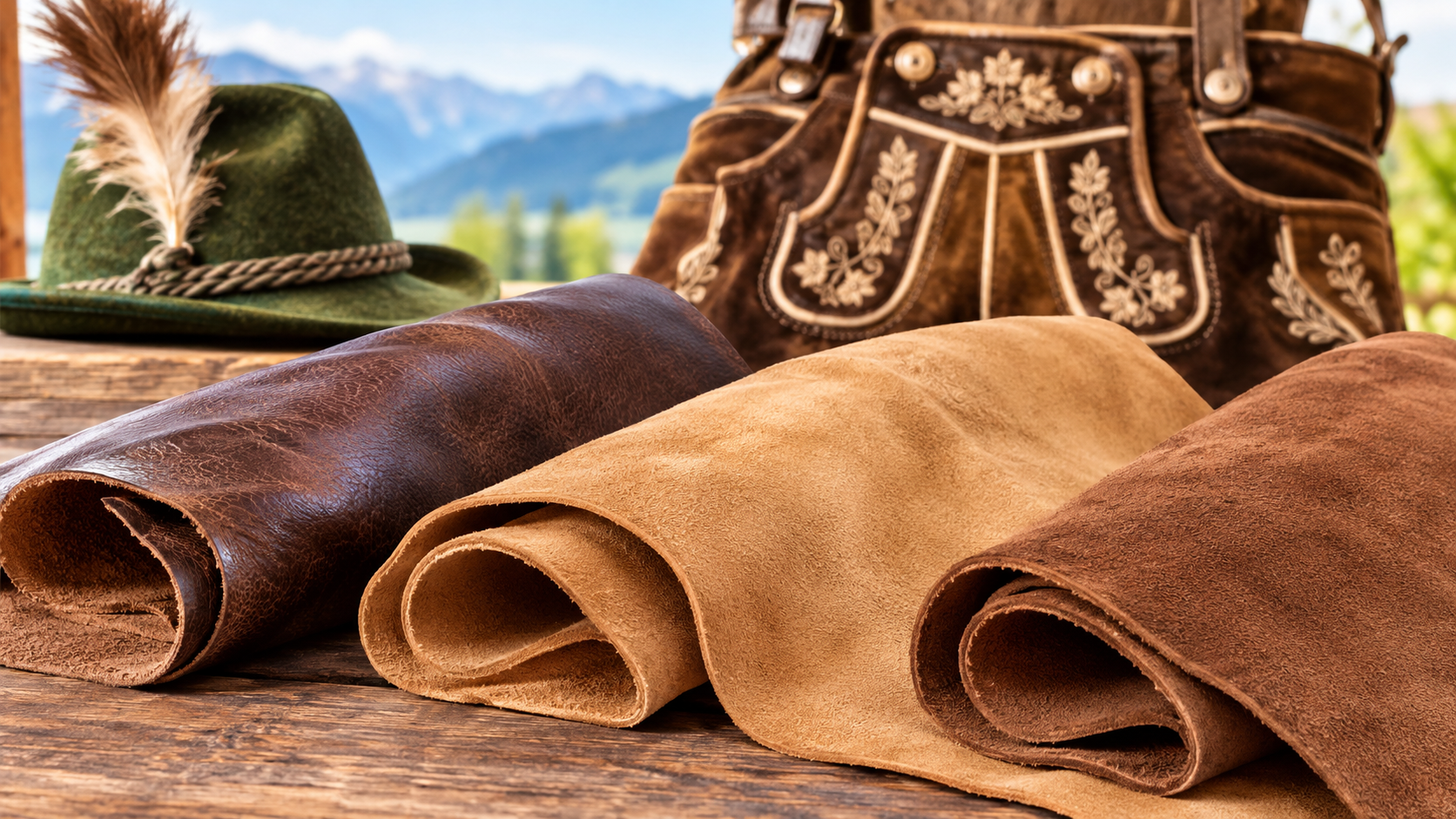
Deerskin is the best leather for German lederhosen if you want the softest feel and a pair that lasts for decades, goatskin is the best balance of softness and price, and cow suede is the best value for occasional wear. The right pick depends on how often you will wear the pair and what you want to spend.
This guide from Lederhosen For Sale compares the three leathers on feel, durability, price and care, so you can match the hide to your budget before you order online.
No single leather wins for every buyer. Deer is the premium choice, goat is the traditional middle ground, and cow is the practical, affordable option. The table compares them in general terms, since exact figures vary by tannery and maker.
| Leather | German name | Feel | Break-in | Typical price | Best for |
|---|---|---|---|---|---|
| Deerskin | Hirschleder | Softest and most supple | Little to none | Highest | Frequent wear, heirloom pairs |
| Goatskin | Ziegenleder | Soft and light | A few wears | Mid to high | Regular wear, balanced budget |
| Cow suede | Rindsleder | Firmer, rugged | Stiff at first | Lowest of the three | Occasional wear, first pair |
Deerskin is the premium choice because it is the softest of the three and drapes well from the first wear. The hides are scarcer than cow or goat, so pairs cost more.
The tanning matters as much as the animal. Traditional deer lederhosen are chamois tanned, a process that uses oil. According to the American Institute for Conservation, chamois are tanned with unsaturated oil, preferably cod liver oil. Oil-tanned leather is very absorbent, so it needs careful care around water.
When you shop, check that a deerskin pair is truly oil tanned. Chrome-treated deer leather can feel rubbery and does not age the same way.
Goatskin gives you most of the softness of deer at a lower price. It is light, flexible and breathable, and it softens quickly with wear. Many Trachten workshops use it for quality pairs because it balances comfort and cost.
Choose goatskin if you will wear lederhosen at several events a year and want a pair that feels comfortable without the cost of deer.
Cow suede is a good choice if you want an affordable pair that stands up to regular use. Cowhide is the heaviest and toughest of the three. It feels stiff at first and relaxes as you wear it. A new pair of lederhosen also loosens by about half an inch to an inch after two or three wears, so use the size guide before you pick a size.
Most cow leather is tanned with vegetable or chrome methods. The Leather Working Group notes that vegetable tanning is the oldest method, and about 75 percent of leather made today is chrome tanned. Both can produce durable leather when done well.
Cow suede is also the leather behind many first pairs. Lederhosen For Sale lists men’s styles in cow suede from $99 to $129 at the time of writing.
No, suede is a finish, not a separate animal. It describes the soft, brushed surface made from the flesh side of a hide, so you can have deer suede, goat suede or cow suede. When a listing says “suede,” ask which animal the hide comes from. Our guide to suede leather and German lederhosen explains how the finish looks and wears.
Smooth leather is easier to wipe clean but shows scuffs sooner. Suede hides marks better but stains more easily, so keep it away from water.
Price follows the animal. Cow costs the least, goat sits in the middle, and deer costs the most. A cow suede pair often starts around $90 to $150, while goat and deerskin pairs commonly run from about $300 up to $500 and beyond. These are approximate retail ranges, and sales change the final price.
Care is similar for all three. Spot-clean the leather, never machine wash it, and let it air dry away from heat. Our tips for keeping lederhosen in prime condition cover storage and everyday cleaning. Deer and goat benefit from conditioning a couple of times a year, and cow needs it a little less often.
You can compare current styles and prices in the men’s lederhosen collection.
Match the leather to how you will use the pair:
Deer is softest and most premium, goat balances softness and price, and cow is the toughest and cheapest. Pick by how often you will wear the pair and your budget.
Yes. Cow suede is durable, affordable and common in first pairs. It feels stiffer than deer or goat at first and relaxes with wear.
Suede is a brushed finish made from the flesh side of a hide. It can be made from deer, goat or cow, so ask which animal the leather comes from.
Deer hides are scarcer than cow or goat, and traditional chamois tanning with oil takes more work. The result is a very soft pair that costs more.
Spot-clean, never machine wash, air dry away from heat, and keep suede away from water. Condition the leather a few times a year if the maker recommends it.
Cowhide is thicker and heavier, so it is usually seen as the hardest wearing. Goatskin is lighter but still strong when well made, and the quality of the tanning matters as much as the animal.
The best leather for German lederhosen is the one that fits how you will wear them and what you want to spend. Deer rewards frequent wearers, goat suits most buyers, and cow suede gives the best value for a first pair. When you are ready, shop lederhosen online and check each product page for the leather type.
Tags